Sunday, 26 October 2014

Boxiana Vol. 1 preview: This Boxer's Life

Chris Hobbs turns from fighting to writing in Boxiana Volume 1

Over the past couple of months, this blog has been featuring a series of exclusive previews of content from Boxiana: Volume 1, which will hopefully whet your appetite and persuade you to buy the full volume, which will be available as a paperback book (RRP £9.99) or ebook (RRP £3.99) from 28 November.

Today I'm presenting an extract from the eighth chapter of Boxiana Volume 1, written by boxer Chris Hobbs in which he describes his life and background. A rising light-heavyweight from Southampton, who is undefeated in 6 pro fights, the 27-year-old Chris has had a fascinating life, including a spell in the army.

I was absolutely delighted when Chris offered to write a piece for Boxiana as I was keen to have the views of boxers themselves featured in the volume. In dealing with Chris I came to discover that he is a total gent as well as extremely gracious and down to earth. In a lovely gesture, Chris asked that I didn't pay him for his work - but instead made a donation to a forces charity, which I duly did.

Boxiana: Volume 1 preview

Round 8
THIS BOXER'S LIFE

Rising Hampshire Light-Heavyweight Chris Hobbs reflects on his life and career inside and outside of the ring ...


I was born in Southampton on 22 July 1987. My mum is from Yorkshire and I do not know my real dad; all I know of him is that he was Jamaican. I was raised by my mum and a stepfather who, to be honest, was like a real dad to me. I grew up with my two sisters and a brother. We never had a lot growing up in terms of material possessions, but that is no different to a lot of people out there. My parents tried as hard as they possibly could to put food on the table and they always made sure we had happy and fun Christmases.


There was a lot of tough love from my dad. Yes, we were like best mates but he was also very big on discipline. As he saw it, I was a black kid in a white family so I would potentially endure a lot of problems growing up – therefore I needed to be tough. To be fair I was quite naughty as a youngster. If it wasn’t for the discipline of my family, I would have probably ended up in jail.

From a boxing point of view, I was inspired from about the age of seven. Typically, like many other youngsters, I watched the Rocky movies, and they fired my passion and imagination. Everyone in my family who had talent to do with sport was football related, but I had two left feet, as they say, and never really liked football until about the age of 15. I was finally allowed to box for the first time at the age of 11 when I turned up at the Eastpoint Centre where Southampton ABC trained. Terry Tew was the guy who was training the kids at the club. Strangely enough, he had actually seen me growing up; his mother-in-law lived behind my house so he had seen me around. The training was a real shock to me; it was so hard I couldn’t believe it, but I was determined. Very determined. I had no natural ability at all – bad footwork, poor timing – the lot! All I had been used to was scrapping in the playground and at that age I wasn’t even good at that!

In my second week at Eastpoint I sparred for the first time. Even though I didn’t do brilliantly I loved it. I managed to survive against kids with much more experience than me and realised I was naturally tough. However, during my first year at the club I wasn’t totally dedicated; I was there some weeks but then I wouldn’t be there again the next week. It took me two-and-a-half years before I knuckled down enough to actually be ready for a fight. The week before my first fight I was taken to Waterlooville boxing club for a sparring session to see if I was ready. Being in a new environment was daunting, but I did very well against a boy who later became a pro, who is now my gym-mate (Ryan Moore) although he doesn’t remember it! We were actually meant to fight each other as our first fight but I was too heavy when the fight came around!

My first amateur fight was in Leigh Park Leisure Centre. The nerves were unbelievably bad. In fact, the nerves before any fight for me are horrible. When the bell rings the nerves leave me, but the actual waiting is horrendous. My first fight was against a guy called Billy Calcot who sadly I heard died in a motorcycle accident a few years later. I don’t remember a lot about my first fight other than being so tired in round two that I couldn’t keep my hands up and my chest was on fire, due to the smoking that was allowed in venues back then! I remember I made him take a count in the third round but I was so tired I slumped into the corner. The ref stopped the count to make me get off the ropes! After that fight I knew I needed to train harder and be fitter; every fight is all about learning. 

Anyway I lost that fight and also lost a rematch a week later (a fight most people thought I won). I got my first win in my third fight, that was followed by a few more wins and a few more losses. But I was always learning and all my opponents always said I was tough and they didn’t enjoy fighting me. I lost one fight to a guy in Swindon and I went to his changing room after only to see him being taken to hospital with concussion, in contrast I felt fine!


THE FULL ARTICLE WILL APPEAR IN THE PRINT AND EBOOK EDITION OF BOXIANA: VOLUME 1, TO BE PUBLISHED IN NOVEMBER

PHOTO COURTESY OF CHRIS HOBBS

CHRIS HOBBS is an undefeated professional light- heavyweight boxer from Southampton. You can follow Chris on Twitter: @chrishobbsboxer

Boxiana: Volume 1 will be available through Troubador PublishingAmazon in the UKAmazon in the USA and all good traditional and online booksellers.

Further exclusive previews of Volume 1 content, as well as further information about Boxiana's contributors will feature on the Boxiana blog in the coming weeks.

FURTHER INFORMATION:

An anthology of new boxing writing Boxiana: Volume 1 will be published on 28 November 2014 through Matador Publishing, in both paperback book and eBook formats. Boxiana editor Luke G. Williams said: “In a world dominated by 140 character limits and the 24-hour news cycle, brevity and superficiality have become de rigueur. Boxiana takes a different approach; by using long-form journalism to take an in-depth look at boxing’s past, present and future, we are hoping that Boxiana will become a vital new voice in sports writing.”

In Volume 1:
Trevor Von Eeden, author of graphic novel The Original Johnson, analyses the significance of Jack Johnson; Mario Mungia tries his hand at amateur boxing; Ben Williams uncovers his grandfather’s bare-knuckle career; James Hernandez catches up with Jon Thaxton; Matthew Ogborn ponders boxers and retirement; rising light heavyweight Chris Hobbs recounts his life in the military and the ring; Rowland Stone recalls a heady night in 1992; Corey Quincy attempts to solve the Wladimir Klitschko conundrum and Luke G. Williams examines the meteoric rise of Deontay Wilder and the under-rated career of Chris Byrd.

Enquiries / review copies: +44 7958 319765 / lgw007@yahoo.com
Previews of Volume 1 content and photos for media use are available through the Boxiana blog:
www.boxianajournal.blogspot.co.ukp/boxiana-volume-1-downloads.html

Boxiana Vol. 1 nears publication


BOXIANA: VOLUME 1

New anthology of boxing writing to be published in November

Exclusive interviews with heavyweight sensation Deontay Wilder, former champion Chris Byrd feature

New illustrations and Jack Johnson article by comic-book legend Trevor Von Eeden also among content


LONDON, UK: An anthology of new boxing writing Boxiana: Volume 1 will be published on 28 November 2014 through Matador Publishing, in both paperback book and eBook formats. Boxiana editor Luke G. Williams said: “In a world dominated by 140 character limits and the 24-hour news cycle, brevity and superficiality have become de rigueur. Boxiana takes a different approach; by using long-form journalism to take an in-depth look at boxing’s past, present and future, we are hoping that Boxiana will become a vital new voice in sports writing.”

In Volume 1:
Trevor Von Eeden, author of graphic novel The Original Johnson, analyses the significance of Jack Johnson; Mario Mungia tries his hand at amateur boxing; Ben Williams uncovers his grandfather’s bare-knuckle career; James Hernandez catches up with Jon Thaxton; Matthew Ogborn ponders boxers and retirement; rising light heavyweight Chris Hobbs recounts his life in the military and the ring; Rowland Stone recalls a heady night in 1992; Corey Quincy attempts to solve the Wladimir Klitschko conundrum and Luke G. Williams examines the meteoric rise of Deontay Wilder and the under-rated career of Chris Byrd.

Enquiries / review copies: +44 7958 319765 / lgw007@yahoo.com
Previews of Volume 1 content and photos for media use are available through the Boxiana blog:
www.boxianajournal.blogspot.co.ukp/boxiana-volume-1-downloads.html

Tuesday, 23 September 2014

Boxiana Vol. 1 preview: Bare-knuckle Grandfather

Ben Williams' grandfather, Charlie Sparrowhawk, strikes a fighting pose

Over the past few weeks, this blog has been featuring a series of exclusive previews of content from Boxiana: Volume 1, which will hopefully whet your appetite and persuade you to buy the full volume, which will be available as a paperback book (RRP £9.99) or ebook (RRP TBC).

Today I'm presenting an extract from the final chapter of Boxiana Volume 1, written by Ben Williams, in which Ben interviews his mother, Christine Sparrowhawk, about her father, the bare-knuckle fighter Charlie Sparrowhawk. 
Through Christine's detailed and fascinating memories, a bygone era of local fairs, boxing booths, and underground bare-knuckle bouts is brought to vivid life. It's a fascinating interview, which also provides some wonderful insights into Romany culture. It's the sort of 'oral history' which is, to my mind, vital in terms of preserving the memory of boxing's rich and varied past.

Boxiana: Volume 1 preview

Round 12
BARE-KNUCKLE GRANDFATHER

Ben Williams has always been fascinated by his family’s stories of his bare-knuckle boxing grandfather. So he decided to sit down with his mother, Christine Sparrowhawk, and get the lowdown on her father, Charlie Sparrowhawk, and cousin, Len Sparrowhawk, who used to box at the legendary Mitcham Fair in the 1960s …

Ben Williams: Can you tell me a little about Charlie?

Christine Sparrowhawk: My father was a Romany and he would never work for anybody. However hard up he was, he was rich, because he was a man, and he was his own man. He would never take orders from anyone, he never borrowedmoney, and he always felt that he owned the world. And he did,  because he didn’t live conventionally like other people with their 9-5 world. He was free, but also managed to bring up a family; three girls and a boy. He lived on his wits and he could make money out of anything. His philosophy – and it’s kept me going through life – was 'if you make money your master, you will be its slave. But if you let money go, it will grow.' He was so generous, the most generous of people.

BW: There was a lot of stigma attached to being a Romany then, as there is now.

CS: When I was growing up, my dad was very different and my grandparents were very different. My mother’s parents were quite smart and they thought she had married very much beneath her into my father’s family. My father’s family were the Sparrowhawks and they were from Mitcham. Every year there was a fair. The Mitcham Fair was old fashioned in a way. You can’t imagine it now. The fairground was beginning to get a bit modern, but the fair still had old-fashioned sideshows like the bearded lady and that sort of thing. Anyway, part of Mitcham Fair was a boxing ring and it was a big ring and they would stand outside and tote for people to come in and bare-knuckle fight. My father used to do it because it was a good way of earning money but also it helped your status within the social circle where he lived in London.

BW: Can you remember what these fights were like?

CS: I can remember going to watch him fight, I can remember holding my big sister’s hand as we channelled into this huge marquee tent that had a proper boxing ring and big lights. All the motes of sawdust would catch in the light and all the crowd would roar – they were very unruly. It was terrifying and I held on to my sister’s hand throughout. I had the worry of watching our dad come out. He was a very, very good fighter and he’d been professionally trained at a boxing school in Mitcham, but he also used to drink, of course, so he’d have a few tots before. Then out he went into the ring. And there was real blood; I mean they’d go at it hammer and tongs – the sawdust was stained with blood ...

THE FULL ARTICLE WILL APPEAR IN THE PRINT AND EBOOK EDITION OF BOXIANA: VOLUME 1, TO BE PUBLISHED IN NOVEMBER
PHOTO COURTESY OF BEN WILLIAMS


BEN WILLIAMS first got into boxing as a boy when his grandfather - a former professional boxer - would playfully spar with him. He has been a fan of the sport ever since. Today, he is a freelance journalist, writing primarily for luxury sector magazines and working with clients such as Aston Martin, Jaeger-LeCoultre, and Anthony Sinclair bespoke tailors. He also writes documentaries, short films and treatments, and has helped develop a number of feature films. He has written a number of feature film trailers, including those for Studio Ghibli’s Arrietty, and Luc Besson’s Adele Blanc-Sec. Ben is also the UK correspondent for Mi6 Confidential magazine, which celebrates the phenomenon of James Bond. He maintains the blog doubleonothing.wordpress.com

Boxiana: Volume 1 will be available through Troubador PublishingAmazon in the UKAmazon in the USA and all good traditional and online booksellers.

Further exclusive previews of Volume 1 content, as well as further information about Boxiana's contributors will feature on the Boxiana blog in the coming weeks.

FURTHER INFORMATION:
Boxiana: Volume 1 is an anthology of never before published boxing writing and takes an in-depth look at the sport’s past, present and future. Original, startling and thought-provoking, Boxiana examines pugilistic themes, characters and issues ranging from the personal to the universal, combining exclusive interview material with meticulous research. The book’s fresh approach will both intrigue and delight all serious followers of boxing.

Featured in Volume 1: comic book legend Trevor Von Eeden analyses the significance of Jack Johnson; Mario Mungia tries his hand at amateur boxing; Ben Williams uncovers his grandfather’s bareknuckle boxing career; Matthew Ogborn considers the issues boxers face on retirement; James Hernandez catches up with Jon Thaxton; rising light heavyweight Chris Hobbs recounts his life in the military and the ring; Rowland Stone recalls a heady night in 1992; Corey Quincy attempts to solve the Wladimir Klitschko conundrum and Luke G. Williams examines the meteoric rise of Deontay Wilder and the under-rated career of Chris Byrd. 

No other boxing anthology can match Boxiana’s eclectic range of subject matter, or its in-depth examination of issues and characters from boxing’s past, present and future.

Luke G. Williams
Editor

Friday, 29 August 2014

Boxiana Vol. 1 preview: The Original Johnson


Over the next few weeks, this blog will be featuring a series of exclusive previews of content from Boxiana: Volume 1, which will hopefully whet your appetite and persuade you to buy the full volume, which will be available as a paperback book (RRP £9.99) or ebook (RRP TBC).

Today I'm continuing the 'boxing comics' theme of several previous posts by presenting an extract from the third chapter of Boxiana Volume 1, written by Trevor Von Eeden which examines Trevor's motivation for the creation of his Jack Johnson graphic novel The Original Johnson.


Trevor's article is a heartfelt, provocative and fiercely intelligent analysis of American history, and Jack Johnson's significance within it. It's a unique and highly creative piece of writing which I absolutely adore, and hope you all will too!
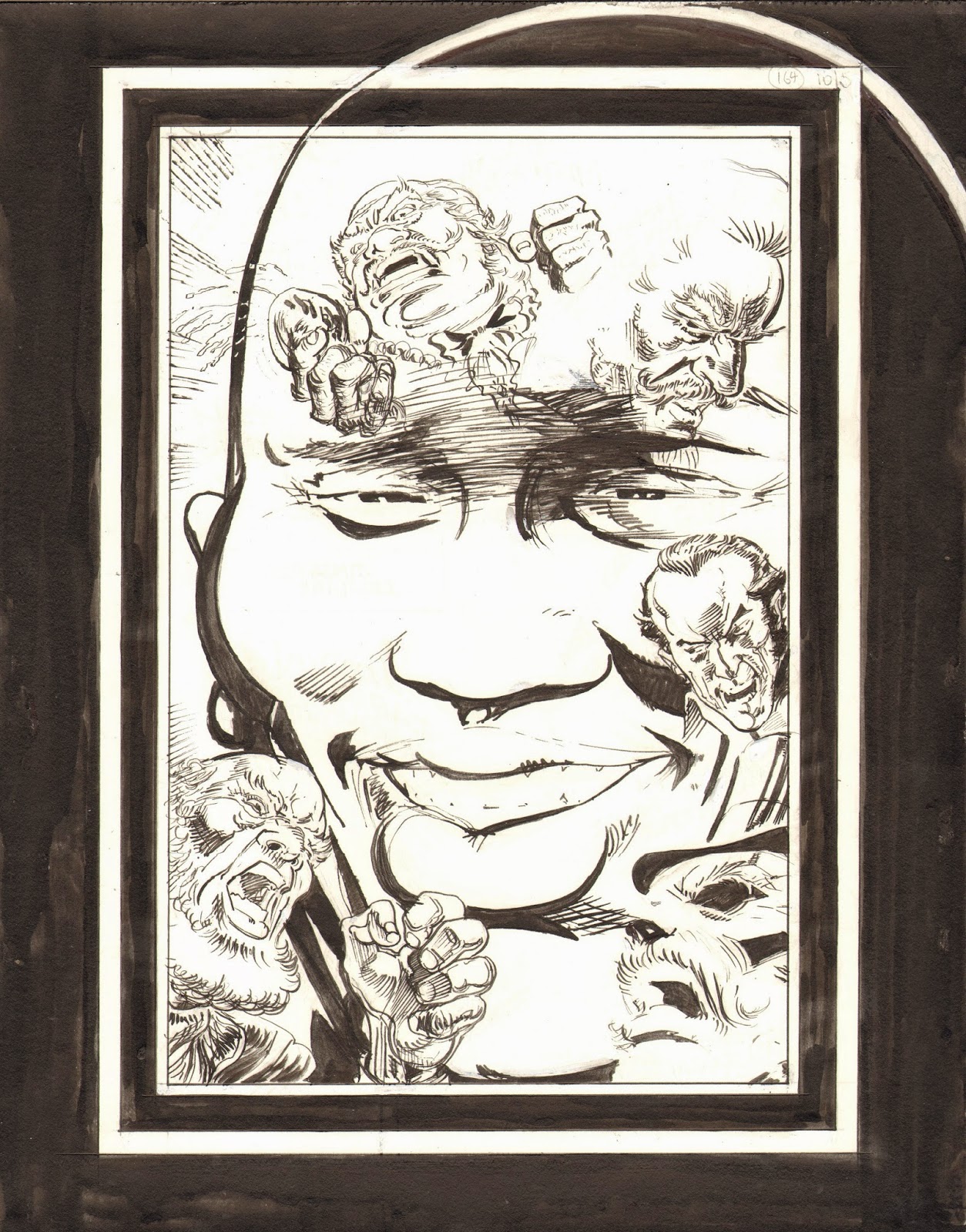
To accompany this extract, Trevor has also kindly supplied Boxiana with some stunning scans of original artwork  from The Original Johnson, as well as some previously unseen examples 0f alternate artwork, including a fabulous cover concept which spins the cliché of the 'great white hope' into the 'great black hope'.

For more info on Trevor click here for Boxiana's interview with him and here for an extract from our article on boxing-themed comics.

As I publish further previews from the anthology in the coming weeks and days, hopefully you'll conclude that Boxiana: Volume 1 will be worth purchasing. If not, then at the very least I hope you enjoy the free sneak peeks and other blog posts!
Anyway, that's enough of the hard sell, here's the latest preview - which consists of the a 1,000 word passage of what is a 6,o00 word feature. Enjoy!


Boxiana: Volume 1 preview

Round 3
THE STORY BEHIND ‘THE ORIGINAL JOHNSON’

Renowned comic-book artist Trevor Von Eeden explains the philosophy and intentions behind his graphic novel masterpiece ‘The Original Johnson’, which tells the story of the pioneering heavyweight legend Jack Johnson …

Jack Johnson was the son of a slave - a man who had been reduced, in the country of his own birth, to the vile degradation of existing as a human being without humanity; a human being without freedom, individuality, dignity, hope - or originality. A human being without any form of reality, whatsoever. A human being with only a memory - of the painful, indisputable, irrefutable, irrevocable fact of his own individual existence, his own personal, inner reality - his own humanity. Living in a world dedicated to fear, hatred, hypocrisy, and above all - conformity. A world now and forever closed and opposed to the simple, self-evident fact of his own reality.


How does a human being not go mad, in a circumstance such as that? Is it possible? Was it possible to be a slave in Early America, and not go insane - eventually? Apparently, from the writings and testimonies of those fortunate few who managed to somehow survive the horrible institution, it was indeed possible. But, oh - what courage it must have taken! True freedom begins in the mind of the individual, and the man that Jack had as a role model in his father must have been a man of extraordinary courage, intelligence, and dignity, to have raised such a son. We’ll never know - but what we do know is that Jack made of himself a genuine hero, a legend - and a creature of inevitable myth. But as a real, live, flesh and blood person - with a childhood, thoughts, hopes, dreams, and fears, just like you and me - Jack has never been a part of the public consciousness. His legend has taken on a mythic status, as if he were a creature of fiction like John Henry, the black ‘steel-drivin’ man’ who died competing against a soulless machine in a contest of railroad track laying.


But Jack Johnson was REAL - and he didn’t die, nor lose, in a contest against the soulless machine that was the world of his day and time - he WON! And he thrived spectacularly, conquering that world single-handedly, again and again, until he chose to end the battle - on his terms. Unfortunately, for the past hundred years or so, his story has been almost exclusively told by the very same people whom he had conquered - and although the indisputable greatness of his unique and unprecedented achievements is such that no distortion of the actual facts of his accomplishments was possible - it was still indeed possible to present a partialized portrait of his personality, life, and character to the public in diluted and selectively constructed form enough to essentially trivialize, marginalize, vilify, and ‘niggerize’ this great man’s memory - especially in the minds of his own people. The simple (or simple-minded) reasoning behind that being so that no others of his ‘ilk’ (i.e: color) would be able to potentially follow in his footsteps, by figuring out exactly how and what he’d done, then doing it themselves. The ‘Great White Hope’ was that black people in America would never realize the potential inherent in their own humanity - period.


Jack Johnson’s entire life and being were a direct refutation and serious threat to that singularly cowardly and corrupt intention. So for the past century, Jack’s actual humanity has been either glossed over, or ignored. Unfathomable mystery became another part of his myth, and legend - he became an official global anomaly, instead of a man of courage who had conquered the forces of an inhuman evil, simply by standing up for his own humanity. What he’d done was extraordinary, no doubt - but absolutely far beyond the abilities of lesser mortals, like your average black American ...  There was nothing in Jack’s legend (as created and perpetuated for four score and twenty years and more, by the same racist culture he’d fought against all his life) that anyone could possibly identify with as a normal, black human being, and say, “Hey, I know how he did that - and I can do it too!” A big reason for that being, of course, that the racist reporters of his day actually didn’t know themselves how he’d done ‘it’ to begin with!


Jack succeeded in his battle against Racism simply because he, himself, was not a racist - how can one really expect people born and raised in an overtly, proudly racist country like early America to understand, much less accept that fact? A man ahead of his time is always just that … In the hands of his enemies, Jack’s very greatness became the means of his diminishment, especially in the minds of the people he truly represented - the oppressed, underprivileged, ignored, and downtrodden - in any society. The poor, huddled masses, as some call them ...  But some truths remain alive in memory, despite every effort to erase, bury, or modify them, and Jack Johnson represented - and will always represent - HUMAN FREEDOM. The only way to defeat racism is with humanity, and Jack lived, exemplified, and applied that doctrine to every facet of his life and personality. It showed in his genial, generous, good-natured character, and was the reason the man enjoyed his life to its zenith. He was free of anyone else’s definition of himself but his own. Jack’s clearly stated p.o.v. on Racism was: “I treat people as if race doesn’t exist” - this profoundly revealing statement is not one of denial, but of dismissal - of the inherently divisive, bogus, and cowardly tenet of Racism itself. But no one of his time understood what he meant, and here in the 21st Century, we’re only now beginning to catch up to this extraordinary man’s exemplarily original - and TRUE - point of view.


How did Jack do it? How did he conquer an entire racist world? How did he create and live a life that no-one else had ever even conceived of before - and enjoy the minutes, hours, days, and years of a life spent right in the midst of his enemies? Easy … he loved his fellow man - and was completely free of their own, self-inflicted fears.

THE FULL ARTICLE WILL APPEAR IN THE PRINT AND EBOOK EDITION OF BOXIANA: VOLUME 1, TO BE PUBLISHED IN NOVEMBER
ALL ARTWORK COURTESY OF TREVOR VON EEDEN

TREVOR VON EEDEN was born on July 24th, 1959, in Georgetown, Guyana (formerly British Guiana) - the only English speaking country in South America. He came to America with his family in 1970. In 1976, at age 17, he became DC Comics’ first black artist - and the youngest they'd ever hired. His first assignment was to co-create their first original black superhero, Black Lightning (the black GL knock-off, John Stewart, had debuted shortly before.) BL is still alive and well in the DC Comics Universe. Over the years, Trevor has also received favorable acclaim for his work on Powerman/ Ironfist #56-59 (1979); The Batman Annual #8 (1982); The Green Arrow mini-series (1983); the cult favorite, Thriller (1983-85); The Black Canary mini-series and subsequent regular series (1990-1993) and Legends of The Dark Knight #149-153 (2001) - his last work for DC Comics, to date. His first self-written/drawn graphic novel The Original Johnson, the story of Jack Johnson, the first black heavyweight champion of the world, was released in December 2009 to generally positive acclaim from fans and critics alike. A quote from the New York Times Book Review graces both covers of the two volume paperback set. Trevor is currently at work on his second book, The Story of HERU: The First Hero, and resides in the Gun Hill Road section of the Upper Bronx. He is single, lives alone, and enjoys his own company quite a bit. When it comes to sex, he likes women - but infinitely prefers them to be smart, rather than dumb. A good wife would be helpful - but not mandatory - for achieving happiness and peace of mind in life. He has no major complaints nor regrets to report.
Boxiana: Volume 1 will be available through Troubador PublishingAmazon in the UKAmazon in the USA and all good traditional and online booksellers.

Further exclusive previews of Volume 1 content, as well as further information about Boxiana's contributors will feature on the Boxiana blog in the coming weeks.

FURTHER INFORMATION:
Boxiana: Volume 1 is an anthology of never before published boxing writing and takes an in-depth look at the sport’s past, present and future. Original, startling and thought-provoking, Boxiana examines pugilistic themes, characters and issues ranging from the personal to the universal, combining exclusive interview material with meticulous research. The book’s fresh approach will both intrigue and delight all serious followers of boxing.

Featured in Volume 1: comic book legend Trevor Von Eeden analyses the significance of Jack Johnson; Mario Mungia tries his hand at amateur boxing; Ben Williams uncovers his grandfather’s bareknuckle boxing career; Matthew Ogborn considers the issues boxers face on retirement; James Hernandez catches up with Jon Thaxton; rising light heavyweight Chris Hobbs recounts his life in the military and the ring; Rowland Stone recalls a heady night in 1992; Corey Quincy attempts to solve the Wladimir Klitschko conundrum and Luke G. Williams examines the meteoric rise of Deontay Wilder and the under-rated career of Chris Byrd. 

No other boxing anthology can match Boxiana’s eclectic range of subject matter, or its in-depth examination of issues and characters from boxing’s past, present and future.
Luke G. Williams
Editor